
Changing the transfer case fluid in your Jeep Wrangler is one of those maintenance jobs that can make a real difference in how your vehicle performs, especially if you enjoy off-roading or drive in tough conditions. Many owners forget this service, thinking it’s complicated or only for mechanics. In reality, with some simple tools, patience, and the right information, you can do it yourself and help your Jeep last longer. This guide explains every step, what mistakes to avoid, and shares tips even some longtime Jeep owners miss.
Why Change Jeep Wrangler Transfer Case Fluid?
The transfer case is vital for distributing power from your engine to the front and rear axles. The fluid inside keeps everything lubricated and cool. Over time, this fluid breaks down due to heat, moisture, and contamination. Old or low-quality fluid can lead to rough shifting, strange noises, and even serious mechanical damage.
Most Jeep Wranglers, especially popular models like the JK and JL, have recommended service intervals for the transfer case fluid—often every 30,000 to 60,000 miles. Check your owner’s manual for your specific model. If you drive in water, mud, or tow heavy loads, change it more often.
Neglecting this job can lead to costly repairs. A new transfer case can cost over $2,000, while a fluid change is usually under $50 in parts. Regular changes keep your 4WD system working smoothly and protect your investment.
Tools And Materials You’ll Need
Gather everything before starting to avoid frustration mid-job. Here’s what you’ll need:
- Socket set (usually 10mm or 3/8” drive)
- Fluid pump (manual or electric, for refilling)
- Drain pan (at least 3 quarts/3 liters capacity)
- Shop rags or paper towels
- Jack and jack stands (or ramps, if needed for clearance)
- Rubber gloves (optional, but keeps hands clean)
- New transfer case fluid (see below)
- Gasket or thread sealant (if required, check your owner’s manual)
Fluid Type And Quantity
Getting the right fluid type is critical. Most Jeep Wranglers use either ATF+4 or Mopar NV245/NV241 transfer case fluid. Always double-check for your specific year and model. You’ll need about 2 quarts (1.8 liters), but check your manual for the exact amount.
Where To Buy Fluid
You can find the correct fluid at auto parts stores or Jeep dealerships. Don’t use generic ATF unless it clearly states Jeep compatibility. Using the wrong fluid can cause damage, so this is a spot where you shouldn’t cut corners.
How To Change Jeep Wrangler Transfer Case Fluid: Step-by-step
Let’s break down the process so you can do it safely and correctly. These steps work for most Jeep Wrangler models, but always review your manual for small differences.
1. Prepare Your Jeep
Park your Jeep on a flat, level surface. Make sure the vehicle is in park (or in gear if manual) and the parking brake is set. If you need more room under the Jeep, use ramps or a jack and jack stands. Never crawl under a vehicle supported only by a jack.
Let the transfer case cool if you’ve just driven. Warm fluid drains better, but hot fluid can burn you. Aim for slightly warm to the touch.
2. Locate The Transfer Case
Crawl under your Jeep from the driver’s side. Look near the rear of the transmission, between the front and rear driveshafts. You’ll see a metal or aluminum case with two plugs—an upper fill plug and a lower drain plug. They are usually hex bolts.
3. Remove The Fill Plug First
Always remove the fill plug before the drain plug. If you can’t get the fill plug out, don’t drain the fluid—you could end up with an empty transfer case you can’t refill.
Use your socket or wrench to loosen the fill plug. It may be tight. If it’s stuck, tap it gently with a rubber mallet.
4. Drain The Old Fluid
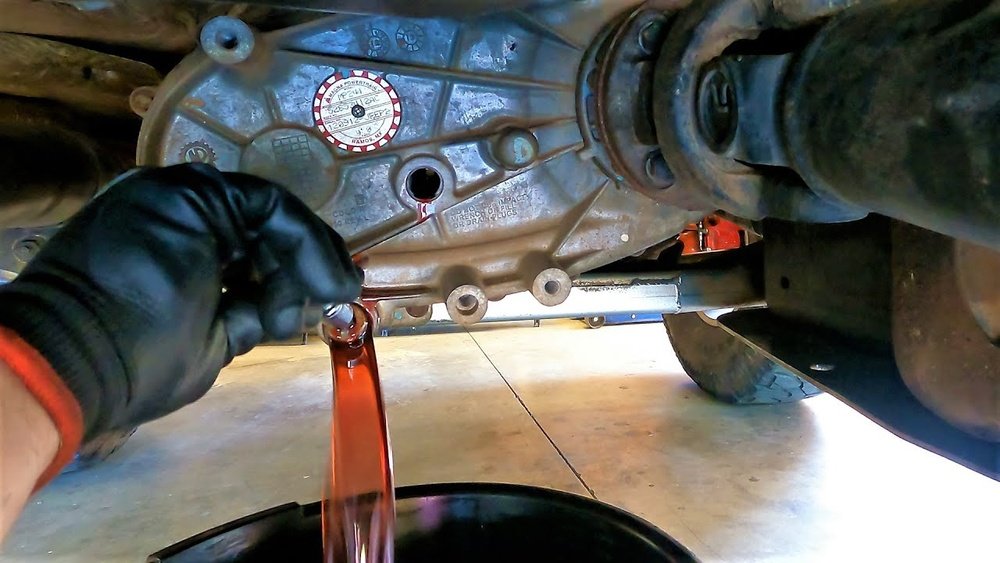
Position your drain pan under the drain plug. Loosen and remove the plug. Fluid will drain out quickly, so make sure your pan is large enough.
Let the fluid drain completely. Inspect the fluid—it should be red or amber, not black, brown, or gritty. A burnt smell or metal shavings mean it was overdue for a change.
5. Inspect And Clean Plugs
Many transfer case plugs have a small magnet to catch metal particles. Clean this magnet with a rag. If you see a lot of metal, it could be a sign of internal wear.
Check the plug threads for damage. Some models need a new washer or sealant. If your plug had a washer, replace it with a new one.
6. Reinstall The Drain Plug
Wipe the area clean and thread the drain plug back in by hand. Then tighten it with your socket, but don’t over-tighten. Most plugs require about 20-25 ft-lbs of torque. If you don’t have a torque wrench, snug plus a little extra is enough.
7. Add New Fluid
Insert your fluid pump into the bottle of new transfer case fluid. Insert the other end into the fill hole. Pump fluid in slowly. Stop when fluid starts to trickle out of the fill hole—this means the case is full.
8. Reinstall The Fill Plug
Clean the area, insert the plug, and tighten to the same spec as the drain plug. Wipe away any drips or excess fluid.
9. Check For Leaks And Test Drive
Lower the Jeep (if lifted). Start the engine and shift into all 4WD modes to circulate the new fluid. Check under the Jeep for leaks. Take a short drive, then re-check the plugs for tightness and look for drips.
Common Mistakes To Avoid
Even experienced DIYers make errors when changing transfer case fluid. Here are mistakes to watch out for:
- Not removing the fill plug first – If you drain the case and can’t open the fill plug, you’re stuck.
- Using the wrong fluid – Always use the recommended type.
- Over-tightening plugs – This can strip threads or crack the case.
- Not cleaning the magnet – You might miss early signs of wear.
- Skipping leak checks – Even small leaks can lead to big problems.
- Ignoring fluid color – Dark or gritty fluid often means it was changed too late.

Credit: www.youtube.com
How Often Should You Change Transfer Case Fluid?
The answer depends on how you use your Jeep. Here’s a simple comparison:
| Driving Condition | Recommended Interval |
|---|---|
| Normal (highway/city) | Every 60,000 miles (96,500 km) |
| Heavy use (off-road, towing, mud/water) | Every 30,000 miles (48,000 km) |
| After deep water crossings | Immediately |
If you ever get water in the transfer case (it will look milky or foamy), change the fluid right away. Water can destroy internal parts quickly.
Transfer Case Fluid Types And Compatibility
Not every Wrangler uses the same fluid. Here’s a quick look at common types:
| Wrangler Model | Transfer Case | Fluid Type |
|---|---|---|
| TJ (1997-2006) | NP231 | ATF+4 |
| JK (2007-2018) | NV241/NV241OR | Mopar NV245/NV241 fluid |
| JL (2018+) | MP3022 | ATF+4 |
Always check your manual. Some newer models are picky about fluid chemistry. Using the correct fluid extends the life of seals and gears.

Credit: trailwrangler.com
Signs You Need To Change Transfer Case Fluid
Watch for these warning signs:
- Grinding or whining noises from underneath while driving
- Difficulty shifting in and out of 4WD
- Fluid leaks around the transfer case
- Burnt smell from under the vehicle
If you notice any of these, change the fluid as soon as possible. Fresh fluid can sometimes fix shifting issues if caught early.
Cost And Time Involved
Doing this job yourself saves money. Here’s a quick cost breakdown:
| Item | Estimated Cost |
|---|---|
| Transfer case fluid (2 quarts) | $20-$30 |
| Fluid pump | $10-$20 |
| Drain pan/rags (if not owned) | $10-$15 |
| Professional labor (if not DIY) | $80-$150 |
The job usually takes about 30-45 minutes. If you’re new, allow an hour.
Advanced Tips Most Beginners Miss
Many guides cover the basics, but here are two advanced tips:
- Rotate your driveshaft by hand before draining fluid. This helps flush out debris stuck to gears.
- Label your old fluid bottles and compare the color of old vs. new fluid each time you change. This helps you spot trends—if it’s getting dirty faster, you may have a seal or gear problem.
Also, when you finish, take a quick photo of the full transfer case for your records. It’s helpful if you sell the Jeep later or need to show maintenance history.
When To See A Professional
If you notice metal chunks, a lot of metallic sludge, or the transfer case is making loud noises even after changing fluid, see a mechanic. These are signs of deeper issues that fresh fluid alone can’t fix.
Also, if you’re not comfortable working under your vehicle, it’s safer to have a shop do the job.
Where To Learn More
For more technical details or updated service bulletins, the official Jeep forums and manufacturer sites are great resources. One trusted reference is the Jeep Wrangler Wikipedia page.
Frequently Asked Questions
How Do I Know If My Transfer Case Fluid Needs Changing?
If you hear strange noises, have trouble shifting 4WD, or see leaks, it’s time to check or change the fluid. Also, follow the recommended mileage interval in your manual.
What Happens If I Overfill The Transfer Case?
Overfilling can cause leaks and foaming, which reduces lubrication. Always fill only until fluid starts to trickle from the fill hole.
Can I Use Generic Atf In My Jeep Wrangler Transfer Case?
Only use generic ATF if it matches the Jeep specification (like ATF+4). Otherwise, stick with the recommended Mopar fluid to avoid damage.
Is It Safe To Change Transfer Case Fluid Myself?
Yes, if you follow safety steps and instructions carefully. Use jack stands if lifting the vehicle, and never work under a Jeep supported only by a jack.
What Should I Do With The Old Fluid?
Take it to a recycling center or auto parts store. Never pour it down the drain or on the ground, as it’s harmful to the environment.
Changing your Jeep Wrangler transfer case fluid is a straightforward job that keeps your vehicle running strong. Taking the time to do it right protects your 4×4 system and can save you from expensive repairs. With the right fluid, tools, and a bit of patience, you’ll be ready for any road or trail ahead.
Credit: www.wayalife.com



