
The Jeep Gladiator and Jeep Wrangler are two iconic vehicles that capture the adventurous spirit of the Jeep brand. Both are instantly recognizable on the road, each with a distinct personality. However, choosing between them can be a challenge, especially if you’re new to off-roading or looking for an all-purpose vehicle.
This guide will walk you through all the key differences, similarities, and details that matter, so you can make a confident, informed decision.
Understanding The Gladiator And Wrangler
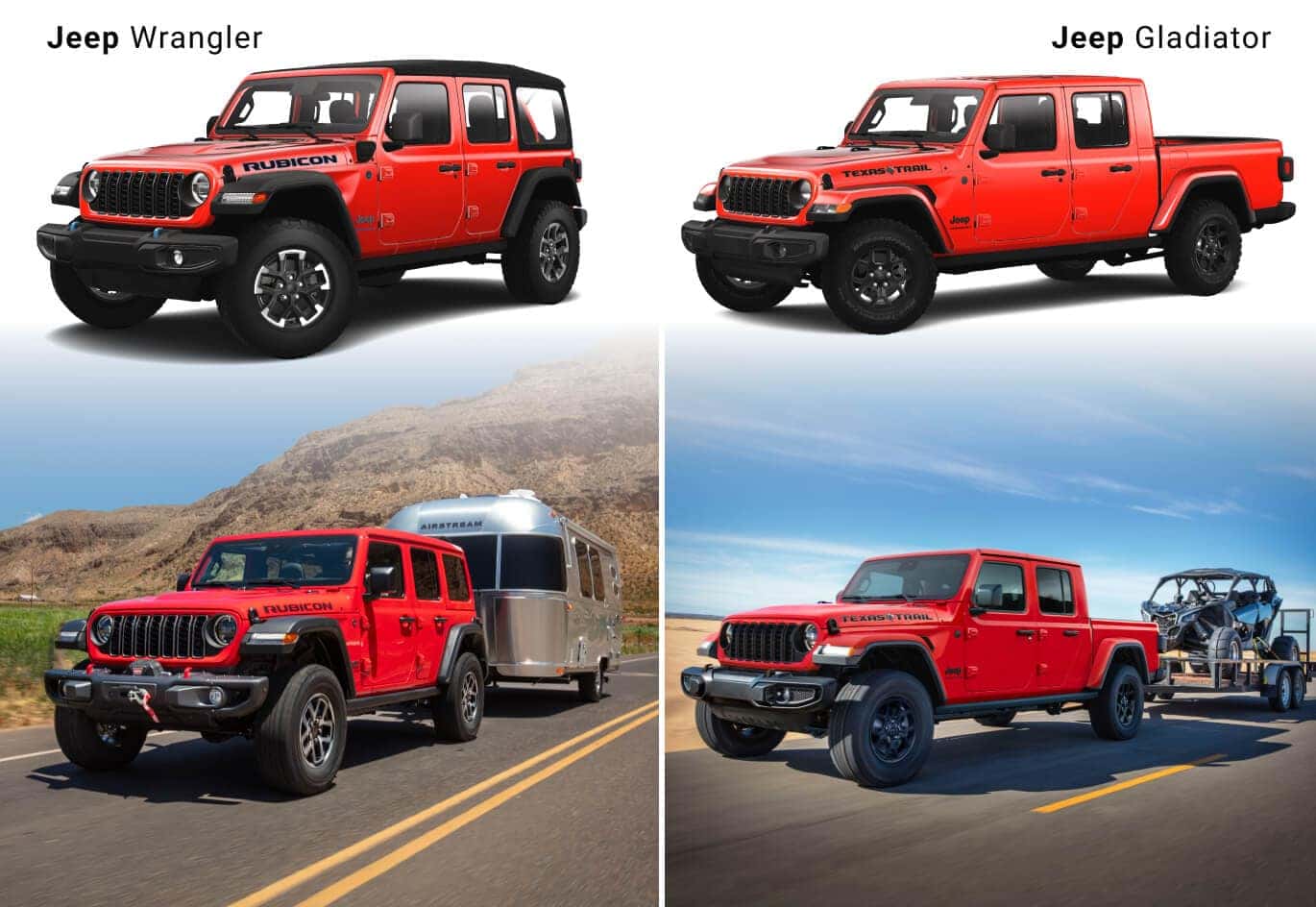
At first glance, the Jeep Gladiator and Jeep Wrangler look similar. Both have the classic seven-slot grille, round headlights, and rugged body lines. But the Gladiator is a midsize pickup truck, while the Wrangler is an SUV. Their core designs affect how they drive, what they can carry, and how you use them daily.
The Wrangler has been around since 1986 and is known for its strong off-road capabilities and removable doors and roof. The Gladiator, launched in 2019, is Jeep’s answer to those who want the Wrangler’s style but need a truck bed for carrying gear or tools.
Exterior Design And Dimensions
Let’s look at how these two Jeeps compare in size and design. Size matters for parking, garage fit, and handling in tight spaces.
| Model | Length | Wheelbase | Width | Height |
|---|---|---|---|---|
| Jeep Gladiator | 218 in | 137.3 in | 73.8 in | 75 in |
| Jeep Wrangler (4-door) | 188.4 in | 118.4 in | 73.8 in | 73.6 in |
| Jeep Wrangler (2-door) | 166.8 in | 96.8 in | 73.8 in | 73.6 in |
The Gladiator is much longer because of its truck bed. This extra length gives it more cargo space but makes tight turns and city parking harder. The Wrangler, especially the 2-door, is compact and easier to maneuver off-road or in urban areas.
Both vehicles offer features like removable doors, roof panels, and a fold-down windshield, making them unique among modern vehicles.
Credit: www.bobsightcdjr.com
Interior Comfort And Features
Inside, the Gladiator and Wrangler look and feel similar. Both have upright dashboards, round air vents, and easy-to-clean materials. The technology features, such as the Uconnect infotainment system, Apple CarPlay, and Android Auto, are available in both.
However, there are some key differences:
- Rear Seat Space: The Gladiator’s rear seats have more legroom, making long trips more comfortable for passengers.
- Storage: The Gladiator’s rear seats can fold up to reveal lockable storage bins—a bonus for keeping tools or valuables safe.
- Noise: The Gladiator’s longer body can sometimes make it a bit quieter at highway speeds compared to the boxier Wrangler.
Both vehicles offer leather seats, heated steering wheels, and advanced safety features on higher trims.
Practical Insights
Many first-time buyers overlook the impact of the longer wheelbase in the Gladiator. It gives a smoother ride on highways but can limit off-road maneuverability compared to the Wrangler. Also, the Gladiator’s rear window does not open, while the Wrangler’s does, which can matter for ventilation.
Cargo And Utility
Cargo capacity is a major difference. The Gladiator, being a truck, is built for hauling.
| Model | Max Cargo Volume | Truck Bed Length | Towing Capacity |
|---|---|---|---|
| Jeep Gladiator | 35.5 cu ft (cab) | 5 ft | Up to 7,700 lbs |
| Jeep Wrangler (4-door) | 72.4 cu ft (with seats down) | N/A | Up to 3,500 lbs |
| Jeep Wrangler (2-door) | 31.7 cu ft (with seats down) | N/A | Up to 2,000 lbs |
If you need to tow a trailer, the Gladiator has a clear advantage. It can tow more than double what the Wrangler can handle. The Wrangler’s strength is in carrying people and camping gear rather than heavy loads.
Off-road Performance
Both vehicles are legends off-road, but their strengths are slightly different.
- Wrangler: Shorter wheelbase, better breakover angle, lighter weight. It’s more agile on rocky trails and can climb over obstacles more easily.
- Gladiator: Shares much of the Wrangler’s off-road gear but is longer, making it less nimble. However, it offers high ground clearance and strong off-road packages (like the Rubicon trim) for serious adventures.
Let’s compare some important off-road specs:
| Model | Approach Angle | Breakover Angle | Departure Angle | Ground Clearance |
|---|---|---|---|---|
| Jeep Gladiator Rubicon | 43.4° | 20.3° | 26.0° | 11.1 in |
| Jeep Wrangler Rubicon (4-door) | 43.9° | 22.6° | 37.0° | 10.8 in |
| Jeep Wrangler Rubicon (2-door) | 44.0° | 27.8° | 37.0° | 10.8 in |
Notice the breakover angle is much better in the Wrangler, especially the 2-door. This means the Wrangler is less likely to get stuck on a hill or rock.
Overlooked Details
Many buyers don’t realize the Gladiator’s longer body can “hang up” on steep inclines. If you plan to do extreme off-roading, this is a key point. Also, the Gladiator’s truck bed can be useful for carrying dirty gear, firewood, or bikes—things you might not want inside the SUV.
Powertrain And Fuel Economy
Both the Gladiator and Wrangler offer similar engines, but the choices can differ year by year.
- 3.6L Pentastar V6: Standard in both, delivers about 285 hp and 260 lb-ft of torque.
- 3.0L EcoDiesel V6: Optional on both, with more torque (442 lb-ft) for towing and better highway fuel economy.
- 2.0L Turbo I4: Available on the Wrangler, not the Gladiator.
- 6-speed manual or 8-speed automatic transmission in both.
Fuel economy is similar, but the Wrangler is often a bit more efficient because it’s lighter. Expect around 17-22 mpg combined, depending on engine and configuration.
The Wrangler 4xe plug-in hybrid is a unique option, offering electric driving for short trips—something not available in the Gladiator.
Credit: www.friscochryslerjeepdodgeram.com
Driving Experience
Daily driving is where these two Jeeps really feel different.
- Gladiator: Rides like a pickup, with a longer wheelbase and smoother feel on highways. The rear suspension is tuned for carrying loads, which can make it bounce a bit when empty.
- Wrangler: Feels more nimble and is easier to park. The 2-door is especially agile, but the ride can be rougher on bumpy roads. The 4-door Wrangler is a good middle ground for families.
Both vehicles have solid axles, which are great for off-road strength but not as smooth as independent suspensions found on many modern SUVs.
Insider Advice
Many new buyers are surprised by the wind noise and “truck-like” ride. These are not flaws, but classic Jeep characteristics. Test drive both on the highway and on rough roads to see which fits your comfort needs.
Pricing And Value
Prices change depending on trims and options, but here’s a general idea:
- Jeep Gladiator: Starts around $39,000 (Sport trim). Rubicon trim can top $54,000 with options.
- Jeep Wrangler: Starts around $33,000 (2-door Sport). A fully loaded 4-door Rubicon can reach $56,000 or more.
The Gladiator usually costs more than a Wrangler with the same features, mostly because of its truck bed and towing capability.
Resale Value
Both Jeeps hold their value well. The Wrangler is one of the best in the industry for resale. Gladiator is also strong, especially in off-road trims. However, the resale market can change, so check local values before buying.
Credit: www.bobsightcdjr.com
Customization And Aftermarket
One of the best things about owning a Jeep is the ability to customize it.
- Wrangler: Huge aftermarket support. You can add lift kits, winches, custom bumpers, and more. The short, boxy shape makes it easy to add roof racks or tents.
- Gladiator: Growing aftermarket, but not as large as the Wrangler yet. You can find bed racks, tonneau covers, bed liners, and more. The longer frame may limit some extreme off-road mods.
Both Jeeps are easy to modify and have a strong owner community for advice and inspiration.
Which Should You Choose?
Deciding between the Jeep Gladiator and Wrangler depends on your needs:
Choose the Gladiator if:
- You need to tow heavy trailers or carry big loads
- You want a pickup bed for bikes, motorcycles, or camping gear
- You like the Wrangler’s style but need more utility
Choose the Wrangler if:
- Off-roading is your main goal (especially technical trails)
- You want a smaller vehicle for city use
- You prefer maximum maneuverability and a classic SUV shape
For most people, the decision comes down to how often they’ll use the truck bed or need to tow. Both vehicles deliver the Jeep experience: removable roof, rugged style, and a sense of adventure.
Frequently Asked Questions
Is The Jeep Gladiator Good For Daily Driving?
Yes, the Gladiator works well as a daily driver, especially if you need a truck for work or hobbies. It’s smooth on highways and offers many comfort features. However, it’s longer than most midsize trucks, so parking can be tricky in tight spots.
Can The Wrangler’s Roof And Doors Be Removed Like The Gladiator?
Absolutely. Both the Wrangler and Gladiator have removable doors and roof panels. This open-air experience is a big reason people love Jeeps. Just remember, removing and reinstalling them takes some practice and basic tools.
Which Model Is Better For Families?
The 4-door Wrangler is popular with families because it’s easier to park and has more rear seat comfort than the Gladiator. However, the Gladiator’s rear seats have extra legroom, and the truck bed is useful for outdoor gear or pets.
How Does Winter Driving Compare Between The Two?
Both vehicles offer four-wheel drive and perform well in snow. The Gladiator’s extra length can make it less nimble on icy roads, but both are stable and have good ground clearance. Adding winter tires will improve safety for either model.
Where Can I Find More Detailed Specifications?
For official specs and the latest updates, visit the Jeep Official Site. They provide detailed comparisons, photos, and videos.
Final Thoughts
Choosing between the Jeep Gladiator and Jeep Wrangler isn’t just about numbers; it’s about how you want to use your vehicle. The Gladiator shines as a unique pickup with Jeep’s off-road DNA, while the Wrangler remains the gold standard for go-anywhere SUVs. Both vehicles will take you places most cars can’t reach and keep a smile on your face while doing it. Take the time to test drive both, think about your real needs, and you’ll find the Jeep that’s right for you.



