

Changing the oil in your Jeep Grand Cherokee can save you money and help your SUV last longer. Many owners think this job is only for mechanics, but with the right tools and knowledge, you can do it at home. This guide breaks down every step, from choosing the right oil to finishing the cleanup. Whether you drive your Grand Cherokee on city roads or dirt trails, regular oil changes keep your engine running smoothly and protect your investment.
Why Regular Oil Changes Matter For Your Jeep Grand Cherokee
Oil is like the lifeblood of your engine. It keeps all the moving parts lubricated and reduces friction. Over time, oil collects dirt, metal shavings, and loses its ability to protect your engine. If you skip oil changes, you risk engine damage, lower fuel efficiency, and even a complete breakdown. Most experts recommend changing the oil every 5,000 to 7,500 miles for a Jeep Grand Cherokee, but always check your owner’s manual for your model’s specific interval.
One insight many beginners miss: driving conditions affect oil life. If you often drive in stop-and-go traffic, tow heavy loads, or travel on dusty roads, your oil may wear out faster. It’s smart to change the oil sooner in these situations.
What You Need Before You Start
Preparation is key for a smooth oil change. Gather all tools and supplies before you lift the hood.
Tools And Materials
- New oil filter (check your Grand Cherokee’s year and engine type)
- Engine oil (usually 5W-20 or 5W-30, but check your manual)
- Oil filter wrench
- Socket wrench set (typically 13mm or 15mm for drain plug)
- Oil drain pan
- Funnel
- Gloves and old rags
- Jack and jack stands or ramps (if needed)
- New washer for drain plug (optional, but recommended)
- Owner’s manual
A common mistake: buying the wrong oil filter. Filters look similar but have small differences. Always match the filter code to your vehicle.
Credit: www.autozone.com
Choosing The Right Oil And Filter
Picking the right oil is critical. Jeep Grand Cherokees use different engines—V6, V8, or diesel—so oil types vary.
| Engine Type | Recommended Oil | Oil Capacity | Filter Type |
|---|---|---|---|
| 3.6L V6 | 5W-20 Full Synthetic | 6 quarts (5.6L) | MO-349 or equivalent |
| 5.7L V8 | 5W-20 Full Synthetic | 7 quarts (6.6L) | MO-899 or equivalent |
| 3.0L Diesel | 5W-30 Synthetic Diesel | 8.1 quarts (7.7L) | MO-339 or equivalent |
Full synthetic oils protect better, especially in extreme temperatures. They also last longer, which means fewer oil changes. For filters, stick with OEM or high-quality aftermarket brands. Cheap filters can cause leaks or let dirty oil back into your engine.
Step-by-step Guide To Changing Your Jeep Grand Cherokee’s Oil
Follow these steps for a safe and complete oil change. Allow about 45–60 minutes if this is your first time.
1. Warm Up The Engine
Start the engine and let it idle for 3–5 minutes. Warm oil drains faster and carries out more contaminants. Don’t make the oil too hot—it should be warm, not scalding.
2. Park And Secure Your Jeep
Park on a flat surface. Turn off the engine, engage the parking brake, and put the transmission in “Park.” If needed, raise the front of the vehicle with a jack and secure it on jack stands or use ramps. Never crawl under a car supported only by a jack.
3. Remove The Oil Filler Cap
Open the hood and unscrew the oil filler cap. This step allows air to enter, so oil drains out faster and more completely.
4. Position The Oil Drain Pan
Slide the oil drain pan under the engine’s oil pan. The drain plug is usually at the bottom or side of the oil pan. Wear gloves to protect your hands from hot oil.
5. Loosen And Remove The Drain Plug
Use the correct socket wrench to loosen the drain plug. Turn the bolt counterclockwise. Once it’s loose, finish unscrewing by hand. Let the oil flow into the pan. Be careful—the oil can come out quickly at first.
Beginners often forget to keep a firm grip on the plug. Don’t drop it into the oil pan—it can be messy to fish out.
6. Let Oil Drain Completely
Wait until the oil slows to a drip. This can take 5–10 minutes. Letting all the old oil drain out is important for engine health.
7. Remove And Replace The Oil Filter
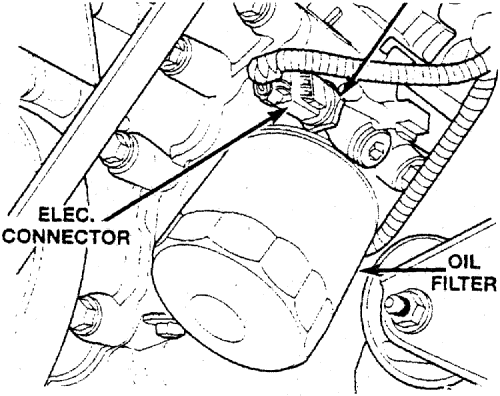
Move the oil pan under the filter area. Use the oil filter wrench to loosen the old filter. Some oil will spill out, so keep the pan underneath. Before installing the new filter, rub a little fresh oil on the rubber gasket—this ensures a tight seal and makes removal easier next time.
Hand-tighten the new filter. Don’t use the wrench to overtighten—this can damage the gasket.
8. Reinstall Drain Plug (and Washer)
Inspect the drain plug and washer. Replace the washer if it’s worn out. Screw the plug back in by hand, then snug it with the wrench. Do not overtighten—this can strip the threads or crack the oil pan.
9. Add Fresh Oil
Place the funnel in the oil filler hole. Pour in the correct amount and type of oil. Refer to your owner’s manual for the precise capacity.
10. Check Oil Level
Wait a minute, then pull out the dipstick. Wipe it clean, reinsert, and pull out again. The oil should be between the “Min” and “Max” marks. Add a little more if needed.
11. Start Engine And Check For Leaks
Start the engine and let it run for a minute. Check under the vehicle for leaks at the filter and drain plug. Turn off the engine and recheck the oil level—top up if necessary.
12. Dispose Of Old Oil And Filter
Never pour used oil down the drain or on the ground. Store it in a sealed container and take it to a recycling center or auto parts store.
Common Mistakes To Avoid
Many new DIYers make errors that can cause bigger problems. Here are the most common pitfalls:
- Using the wrong oil weight: Always check your manual or the oil cap for the recommended viscosity.
- Forgetting to replace the drain plug washer: This can lead to slow leaks.
- Over-tightening the oil filter or drain plug: This can damage engine parts or make them impossible to remove later.
- Not checking for leaks: A small leak can become a big repair if unnoticed.
- Not resetting the oil change indicator: Your Jeep might still warn you to “change oil soon” if you skip this step.
Resetting The Oil Change Indicator
After changing the oil, your Jeep Grand Cherokee may need the oil change reminder reset. The process is simple:
- Turn the ignition to “On” without starting the engine.
- Press the gas pedal slowly three times within 10 seconds.
- Turn the ignition off.
The oil change light should reset. If it doesn’t, repeat the steps or check your owner’s manual for model-specific instructions.

Credit: jed-co.com
How Often Should You Change Your Oil?
The answer depends on your Jeep’s year, engine, and driving style.
| Model Year | Engine Type | Recommended Interval | Severe Use Interval |
|---|---|---|---|
| 2011–2021 | Gasoline | 7,500 miles | 5,000 miles |
| 2014–2021 | Diesel | 10,000 miles | 6,000 miles |
| Older Models | All | 3,000–5,000 miles | 3,000 miles |
If you tow, drive in mountains, or use your Jeep for short trips, change oil at the shorter interval.
Extra Tips For A Clean And Easy Oil Change
- Place newspaper or cardboard under your Jeep to catch drips.
- Keep a flashlight handy to inspect dark areas.
- Record the date and mileage of your oil change. Keeping a log helps you stay on schedule.
- Always hand-tighten the filter to avoid damaging the gasket.
- Take your time the first time. Rushing leads to mistakes and spills.
One smart tip: Save your oil change receipts and records. If you ever sell your Jeep, this shows buyers you maintained the vehicle well.

Credit: www.youtube.com
When To See A Professional
Even experienced DIYers sometimes need help. If you notice:
- Cross-threaded or stripped drain plug
- Leaks that don’t stop after tightening
- Oil warning light stays on
- Strange engine noises after oil change
It’s best to visit a trusted mechanic. Small mistakes can lead to costly repairs if ignored.
Where To Find More Information
Your owner’s manual is always the best resource for specific details. For further reading, the official Jeep Maintenance Guide offers more maintenance tips, recall information, and how-to videos.
Frequently Asked Questions
How Much Oil Does A Jeep Grand Cherokee Need?
Most V6 engines require about 6 quarts (5.6 liters), while V8 engines need 7 quarts (6.6 liters). Diesel engines may need more. Always check your owner’s manual for the exact amount.
What Type Of Oil Is Best For My Jeep Grand Cherokee?
Use full synthetic oil with the correct viscosity (usually 5W-20 or 5W-30) for best performance and engine protection. Some older models may use conventional oil, but synthetic is generally better.
Can I Change My Jeep’s Oil Without Ramps Or Jack Stands?
If your Grand Cherokee has enough ground clearance, you may not need ramps or a jack. However, for safety and ease of access, ramps or jack stands are recommended.
What Should I Do With The Old Oil And Filter?
Store used oil in a sealed container and take it, along with the old filter, to a recycling center or an auto parts store that accepts used oil. Never throw oil in the trash or pour it down the drain.
How Do I Know If I Made A Mistake During The Oil Change?
Watch for leaks under your Jeep, check the oil level after running the engine, and make sure there are no warning lights on your dashboard. If you hear new engine noises or see oil pressure warnings, stop driving and consult a mechanic.
Changing your Jeep Grand Cherokee’s oil yourself gives you control over your vehicle’s health and saves money over time. With each oil change, you’ll build confidence and learn more about your SUV’s needs. Remember, careful preparation and attention to detail are the keys to success.



