Jeep Grand Cherokee owners know the feeling: you’re driving down the road, hit a bump, and suddenly the front end starts to shake violently. The steering wheel vibrates so much that you feel you might lose control. This is called the death rattle—and it’s both scary and dangerous. While it’s common in older Jeeps, it can happen to any Grand Cherokee with worn suspension or steering parts. The good news is, you can fix it and drive with confidence again. This guide will show you how to find the cause, repair the problem, and prevent it from coming back.
What Is Jeep Grand Cherokee Death Rattle?
The death rattle is not just a simple vibration. It’s a severe shaking of the front suspension and steering, usually at speeds over 45 mph after hitting a bump or pothole. It feels like the Jeep is going to shake apart, and it won’t stop until you slow down or stop completely. Most drivers confuse it with a simple wheel imbalance, but the death rattle is much more violent and dangerous.
Death rattle is most common in solid front axle vehicles like the Jeep Grand Cherokee (especially 1999–2010 models). The main cause is loose or worn steering and suspension parts. When one piece becomes loose, the energy from the road causes the whole system to vibrate uncontrollably.
Common Causes Of Death Rattle
Finding the real source of the death rattle is key to fixing it. Usually, it’s a combination of several worn parts, not just one. Here are the main causes:
1. Worn Track Bar Bushings Or Bolts
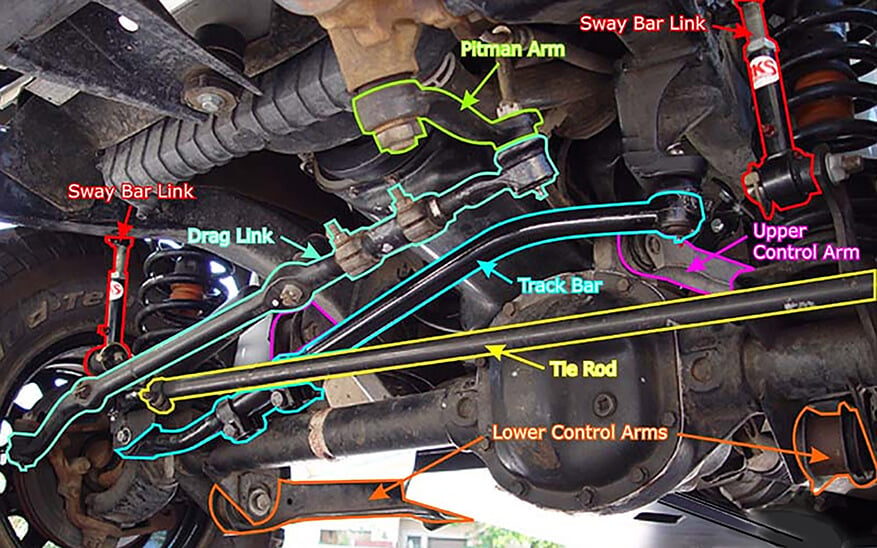
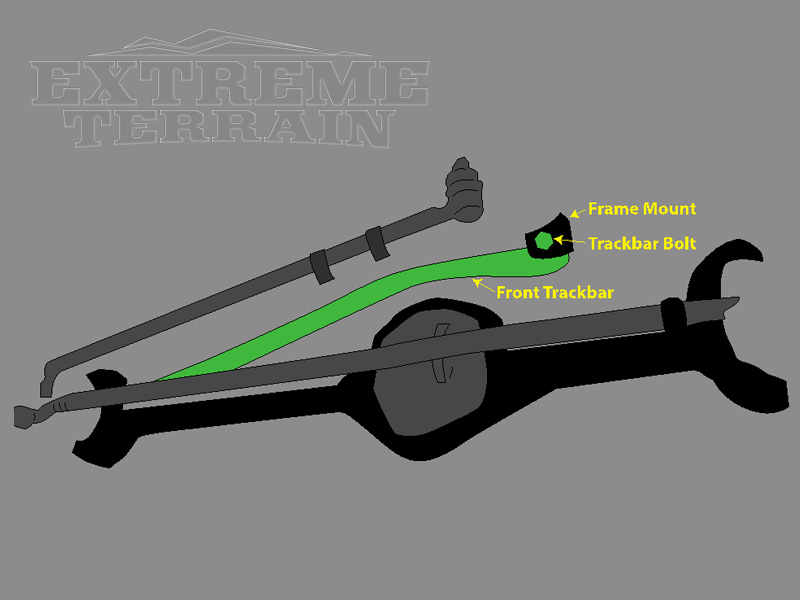
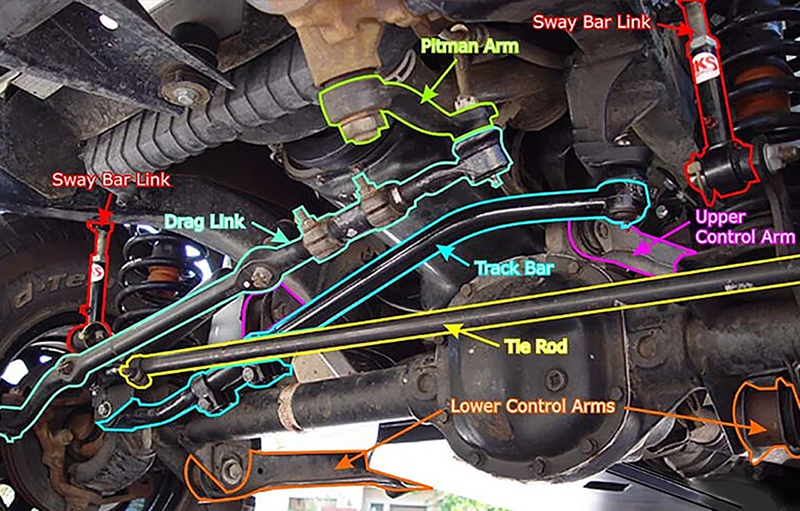
The track bar keeps the axle centered under the Jeep. If its bushings or bolts are loose or worn, the axle can move side to side, causing violent shakes.
2. Bad Tie Rod Ends
These connect the steering to the wheels. Worn tie rod ends cause play in the steering, making it easy for vibrations to start and grow.
3. Loose Or Failing Ball Joints
Ball joints let the wheels move up and down. If they’re loose, the wheel can shake, especially after hitting a bump.
4. Damaged Control Arm Bushings
The control arms keep the wheels in line. Their bushings absorb shock. When worn, they can’t hold the axle still.
5. Worn Steering Stabilizer
A steering stabilizer is like a shock absorber for your steering. If it’s weak, it can’t control sudden vibrations.
6. Wheel Alignment Problems
Bad toe, caster, or camber settings make the Jeep more sensitive to bumps and vibrations.
7. Unbalanced Or Bent Wheels
A wheel that’s out of balance or bent can make vibrations worse, triggering the death rattle.
8. Loose Steering Gearbox Or Frame Bolts
If the steering box is not tight on the frame, or the frame is cracked, the steering can flex and cause vibrations.
It’s important to check all these parts. Fixing only one usually does not solve the problem.
Credit: doubleblackoffroad.com
Diagnosing The Death Rattle
Before replacing any parts, inspect the Jeep carefully. Here’s how to check each area:
Visual Inspection
Start by looking under the Jeep. Check for:
- Missing or broken bolts
- Cracked or leaking bushings
- Signs of metal rubbing or wear
- Grease leaking from ball joints or tie rod ends
Hands-on Checks
Jack up the front of the Jeep and secure it safely. With the wheels off the ground:
- Grab each front wheel at 3 and 9 o’clock: Wiggle side to side. Play here means bad tie rod ends or steering links.
- Grab each wheel at 12 and 6 o’clock: Wiggle up and down. Play means bad ball joints.
- Shake the track bar: Any movement at the bushings or bolts means it’s worn out.
Test Drive
Drive the Jeep at the speed where the death rattle starts. Listen and feel for:
- Shaking in the steering wheel
- Clunking noises over bumps
- The exact moment the shake starts (note if it’s always on bumps, turns, etc.)
Non-obvious tip: Sometimes, the cause is a combination—like a slightly loose track bar AND a weak steering stabilizer. Fixing just one may not stop the death rattle.
Step-by-step Fix: How To Stop The Death Rattle
Once you find the worn or loose parts, follow these steps to fix the problem for good.
1. Tighten All Steering And Suspension Bolts
Even if nothing looks broken, loose bolts can cause or worsen death rattle. Using a torque wrench, check:
- Track bar bolts at both ends
- Steering gearbox bolts to the frame
- Control arm bolts
Use the correct torque setting from your Jeep’s manual. Even a small amount of looseness can cause problems.
2. Replace Worn Track Bar And Bushings
If the track bar moves by hand, it’s worn. Replace it with a quality part, not the cheapest option. Some aftermarket track bars are stronger and have better bushings than stock.
- Remove the old track bar.
- Press out the old bushings.
- Install new bushings, or replace the bar if needed.
- Torque bolts to spec.
3. Change Bad Tie Rod Ends
If you feel play in the tie rods, replace them:
- Remove the cotter pin and nut.
- Use a tie rod puller to remove the end.
- Install the new tie rod end.
- Re-torque all fasteners.
An alignment is needed after this step.
4. Check And Replace Ball Joints
Ball joints need special tools to change. If you find play, consider replacing upper and lower at the same time. This prevents future problems.
- Remove the wheel and brakes.
- Press out old ball joints.
- Install new ball joints.
- Reassemble and torque all bolts.
5. Inspect And Replace Control Arm Bushings
Cracked or split bushings must be replaced. It’s best to change both sides at once. Use heavy-duty bushings if you drive off-road.
- Remove control arm.
- Press out old bushings.
- Install new bushings.
- Reinstall and torque bolts.
6. Change The Steering Stabilizer
A weak stabilizer makes everything worse. It’s a simple and affordable fix.
- Unbolt the old stabilizer.
- Bolt in the new unit.
- Check for smooth steering movement.
Note: A stabilizer is not a cure by itself. It only helps after all other parts are tight.
7. Fix Wheel Alignment
Have the alignment checked by a professional. Make sure:
- Toe is set to factory specs
- Caster is correct (too little caster causes death rattle)
- Camber is correct
Slightly more positive caster (within spec) can help stability. Ask your shop about options.
8. Balance And Inspect Wheels
Unbalanced or bent wheels can trigger vibrations. Have all wheels balanced and checked for bends or cracks. Replace damaged wheels.
9. Inspect Frame And Steering Gearbox
Check the frame where the steering gearbox mounts. Look for cracks or loose bolts. If you find cracks, have them welded and reinforced. Tighten all gearbox bolts to factory spec.
Non-obvious insight: Aftermarket frame braces are available and can stop flexing, especially if you have larger tires.
Preventing Death Rattle From Coming Back
After fixing the problem, you want to keep it away for good. Here’s what works:
- Inspect suspension every oil change. Look for looseness or leaks.
- Rotate and balance tires every 6,000 miles. This keeps vibrations away.
- Use quality replacement parts. Cheap bushings or joints wear out fast.
- Avoid huge tires or lifts without upgrading steering parts. Bigger tires add stress and can trigger death rattle.
- Don’t ignore early signs. A small vibration today can be a death rattle tomorrow.
Many Jeep owners overlook the importance of regular checks, thinking one repair is enough. In reality, the suspension is a system—each part affects the others.
Cost Comparison: Diy Vs. Mechanic
Fixing death rattle can be affordable, but some repairs need special tools. Here’s a quick comparison:
| Repair | DIY Cost | Mechanic Cost | Skill Level |
|---|---|---|---|
| Track Bar Replacement | $80-$200 | $250-$400 | Medium |
| Tie Rod Ends | $40-$120 | $100-$250 | Medium |
| Ball Joints | $120-$300 | $250-$600 | Advanced |
| Steering Stabilizer | $35-$100 | $90-$180 | Easy |
| Wheel Alignment | N/A | $80-$120 | Pro Only |
If you have tools and some experience, many jobs can be done at home. For ball joints and alignment, it’s best to use a professional.
Credit: www.extremeterrain.com
Most Overlooked Repairs That Solve Death Rattle
Some fixes often get missed:
- Frame cracks near the steering box: Even a small crack can cause flex and vibrations. Have a shop check and reinforce the frame if needed.
- Upper control arm bushings: Lower bushings get replaced, but upper ones also wear out and can cause the same problem.
- Steering gearbox bolts loosening over time: Re-check torque every 10,000 miles.
Non-obvious advice: If your Jeep has a lift kit, make sure all suspension parts are designed for your new ride height. Stock parts may not work well with lifted suspensions.
Real-world Example: 2007 Jeep Grand Cherokee
A 2007 Grand Cherokee owner noticed severe shaking at 55 mph after hitting highway bumps. After replacing just the steering stabilizer, the problem was better, but not gone. A full inspection showed:
- Track bar bushing cracked
- Right outer tie rod end loose
- Front tires out of balance
After replacing the track bar and tie rod end, and balancing the wheels, the death rattle disappeared. This example shows the importance of checking all parts, not just the most obvious one.
Upgrade Parts Vs. Stock: What Works Best?
Some owners wonder if they should buy heavy-duty or aftermarket parts. Here’s a quick look:
| Part | Stock | Aftermarket | Notes |
|---|---|---|---|
| Track Bar | Good | Stronger bushings | Aftermarket best for lifted Jeeps |
| Steering Stabilizer | Basic | Better damping | Aftermarket lasts longer |
| Ball Joints | Standard | Heavy-duty available | Upgrade for off-road use |
Choose stock parts for daily driving, but upgrade if you off-road or run larger tires.
When To See A Professional
If you’ve replaced parts and still have problems, or if you don’t feel safe doing suspension work, see a trusted mechanic. Death rattle is dangerous. It’s better to get expert help than risk your safety. For more about Jeep suspension and steering, visit the official Jeep website.
Credit: doubleblackoffroad.com
Frequently Asked Questions
What Is The Most Common Cause Of Jeep Grand Cherokee Death Rattle?
The most common cause is worn track bar bushings or loose track bar bolts. But often, several parts are worn at the same time.
Can A Bad Steering Stabilizer Alone Cause Death Rattle?
A weak steering stabilizer can make things worse, but it rarely causes death rattle alone. It’s usually a worn part plus a weak stabilizer.
Is It Safe To Drive With A Death Rattle?
No, it is not safe. The shaking can cause you to lose control. It can also damage other suspension parts if not fixed quickly.
Will A Wheel Alignment Stop The Death Rattle?
An alignment can help, but only if all worn parts are replaced first. Alignment alone won’t solve the root problem.
Are Aftermarket Parts Better Than Stock For Fixing Death Rattle?
Aftermarket parts are sometimes better, especially for lifted or off-road Jeeps. But high-quality stock parts work well for most daily drivers.
Dealing with the Jeep Grand Cherokee death rattle can feel overwhelming, but with careful inspection, the right repairs, and regular maintenance, you can solve it for good. Your Jeep should be safe and smooth on every drive—don’t settle for less.